Futures Trading for Bicrypto
Perpetual futures on your own order book: you set the leverage rungs, keep the fees, and carry the risk.
- Perpetual contracts — no expiry, no roll, no settlement date to manage
- Isolated margin: a position can never lose more than the margin it posted
- Hedge mode — a long and a short on one symbol are two separate positions
- Server-side stop-loss and take-profit, enforced by the engine, not a browser
- Two-stage liquidation: a trim at 70% of margin lost, a close at 90%
- Liquidations trade out as reduce-only orders at the bankruptcy price
- Shortfalls logged with their size, so you can see what a rung really costs
- Per-market leverage rungs the order route enforces — no 1000x by accident
- Maker or taker decided by the resting book, so a limit order is not overcharged
- Fees land in your platform wallet as TRADE entries, refunded on a cancel
- A risk console with open interest, side skew and the at-risk queue
- 13 chart timeframes from 1 minute to 1 week, built off your own candles
Inside Futures Trading
Your own perpetuals book, and your own risk
Perpetual contracts, leverage rungs you publish, isolated margin, hedge-mode positions and server-side stops — all matched on your own order book, with a liquidation engine that trades positions out against real depth rather than settling them off a price.
In detail
Futures Trading turns your Bicrypto install into a perpetual futures venue. Traders go long or short with leverage on markets you define, and every position settles against your own order book — not a broker's, not an exchange's. You are the counterparty to the whole book. That is where the fee revenue comes from, and it is where the risk sits: if the engine liquidates late, the shortfall is yours.
How it works
A trader picks a leverage rung, an amount and a price, and posts isolated margin — entry price × amount ÷ leverage — from a dedicated FUTURES wallet in the quote currency, which is fundable from an ECO wallet and from nothing else. A market order is priced by walking your own resting book at placement; there is no external price feed and no index. Every open position is re-marked against your market's own last traded price on a two-second sweep, which enforces the trader's stop-loss and take-profit first and only then evaluates liquidation. A liquidation is a real reduce-only order placed at the bankruptcy price, so the exposure passes to whoever takes it instead of being settled off a number.
What you configure, per market
| Field | What it decides |
|---|---|
| Leverage rungs | The exact list the ticket renders and the order route enforces |
| Amount and cost limits | Contract size, and the notional a single order may reach |
| Price precision | Decimal places — and the rounding applied to every margin |
| Maker and taker | Charged on the notional, credited to your platform wallet |
| Status, trending, hot | Whether the market takes orders, and where it surfaces |
What operators control
A three-step wizard builds a market from two active Ecosystem tokens. A risk console shows open interest, side skew, the positions closest to liquidation and where leverage is concentrated, over a 24h, 7d or 30d window. Seven permission keys split market, order and position access across staff. Switching a market off stops new entries while cancels, closes, stops and liquidations all keep working, so winding a contract down never traps a trader's money. Every wallet leg carries a deterministic idempotency key, and two reconcilers replay anything a crash interrupted.
Futures needs Bicrypto core, the Ecosystem addon and a reachable ScyllaDB: without Ecosystem the order routes answer 503 and the matching engine never starts. Two operational facts to plan for. The two-second sweep is the only thing that liquidates, and it runs solely in the process holding the `futures-matching` lease — a dedicated cron process is structurally refused that lease, so if your web process never boots the engine, nothing is ever liquidated. And the transfer matrix allows ECO ⇄ FUTURES and nothing else, so a trader holding SPOT or FIAT moves to ECO first.
Know the gaps before you promise them — this desk settles no funding, has no insurance fund, no cross margin, no self-trade prevention and no admin force-close. You can disable a market and watch a position, but you cannot end one for a trader.
A trim is not a close, and the row tells you which happened
The engine computes return on margin for every open position on a two-second sweep and acts twice. At 70% of the posted margin lost it trims 80% of the size and leaves the row OPEN — there is no PARTIALLY_LIQUIDATED status, and a trimmed position is left alone for sixty seconds so a flat maintenance requirement cannot grind it away at a mark that never reached the liquidation price. At 90% it closes the position, writes LIQUIDATED and zeroes the amount. A position a trader closed keeps its size, which is the fastest way to read the admin table: size zero means the engine ended it.
The trader's own stop-loss and take-profit are checked first on every pass. If one price reaches both a stop and the liquidation level, the stop wins. The sweep runs only in the process holding the futures-matching lease — a dedicated cron process is refused that lease, so check the boot log for the engine claiming it or nothing is ever liquidated.
Liquidation trades out against your book — and the gap is yours
There is no external venue behind this. A liquidation is submitted as a reduce-only limit order on the opposite side, priced at the bankruptcy price where the whole posted margin is gone, so it crosses every level resting better than that and whoever takes it inherits the exposure with their own margin behind it. Cost and fee are zero — a trader is never charged for being liquidated. Whatever the book cannot absorb on a full liquidation is settled against the mark and logged as FUTURES_SHORTFALL with its size in the quote currency.
There is no insurance fund. Watch your logs for FUTURES_SHORTFALL: a run of them means your leverage rungs are writing cheques your order book cannot cash, and the only levers are lower rungs, tighter size limits and real depth.
You publish the leverage rungs, so you set the distance
Each market carries its own comma-separated list of rungs. The trading ticket renders exactly those values and the order route rejects anything else with the available list in the message. The distance from entry to liquidation is 0.9 divided by the leverage, derived from the same constant the engine liquidates on rather than typed twice: 18% at 5x, 4.5% at 20x, 0.9% at 100x. Leverage is fixed at placement, so changing a market's rungs affects the next order and never an open position.
Markets are made by pairing two ACTIVE Ecosystem tokens. Futures needs Bicrypto core, the Ecosystem addon and a reachable ScyllaDB — without Ecosystem the order routes answer 503 and the matching engine never starts. Margin lives in a FUTURES wallet the transfer matrix funds from ECO and nowhere else, so a trader on SPOT or FIAT moves to ECO first.
You are the counterparty, so there is a page that says so
The risk console reads the whole open book at once: open interest and side skew, net exposure, unrealised profit and loss across every position, and the eight closest to liquidation with the trader named. Positions are bucketed into three bands by how much of their margin has gone, and into five leverage bands beside them, over a 24-hour, 7-day or 30-day window. It is cached for fifteen seconds, so leaving the tab open does not put a table scan on your database every few seconds.
The warning line is not a design decision — it is the engine's own partial-liquidation threshold divided by the full one, 0.7 of 0.9, so everything at or past 77.8% is a position the engine will trim on its next mark. Change either constant and the console's line moves with it rather than drifting away from the behaviour it describes. If the scan is truncated by its own row cap, the console says it was truncated and gives you both numbers.
- mark sweep, every position
- 2s
- chart timeframes, 1m to 1w
- 13
- staff permission keys
- 7
- sweep and reconciler cron jobs
- 3
Everything included
129 capabilities, in 11 areas
Every item below exists in the source you receive. Nothing here is a roadmap.
Markets you define
A contract is one row and one metadata blob, and that blob is every rule a trader plays by.
- Perpetual contracts created by pairing two active Ecosystem tokens
- Three-step create wizard: the pair, the trading rules, the fees
- Amount and price precision set per market
- Minimum and maximum contract size, per market
- Minimum and maximum order price, per market
- Minimum and maximum order notional, per market
- Leverage rungs published per market as an explicit list
- Taker and maker fee rates set per market, and honoured at zero
- Optional reference funding rate published on the market
- Trending and Hot flags that badge a market in the trading list
- Enable or disable a market, one at a time or in bulk
- Delete a market, one at a time or in bulk
- Live edits that take effect on the next order, never on an open position
- Markets table with per-column filter, sort, search and a detail dialog
What a trader sees
The screens the desk is actually used from.
- Public perpetuals list with search, a high-leverage filter and sorting
- Futures tab in the trading screen's market panel, with live tickers
- Candlestick chart fed by your own futures candle series
- Order book panel, fifty levels a side
- Open orders, order history, and the individual fills behind them
- Open positions and closed-position history
- Cancel a resting order from the panel
- Close a position from the panel, with the PnL shown before you confirm
- Mobile layout of the whole trading screen
The order ticket
Everything a trader sets before the order leaves the browser.
- MARKET and LIMIT tickets on one screen
- Long and short as two explicit buttons
- Leverage slider snapped to the rungs the market publishes
- Limit-price nudges at half and one per cent
- Preset order sizes
- Stop loss and take profit, entered as a price or as a percentage
- Preset stop-loss and take-profit percentages
- Risk-to-reward ratio with a low, medium or high read
- Estimated loss and estimated profit before placing
- Position value, posted margin and fee previewed at the market's own rate
- Maker-or-taker preview that follows the book, not the order type
- Hedge-mode notice when the opposite position is already open
- Quote-currency futures balance beside the ticket
Orders and matching
Your own book, and the arithmetic that fills against it.
- Two order types — LIMIT and MARKET, and nothing else is accepted
- Matching on price crossing against your own resting book, serialised
- Market orders priced by walking that book at placement
- A per-unit cap so a sweep cannot fill deeper than it was priced
- Margin reserved at the dearest level the sweep can reach
- Fee and notional limits measured on the volume-weighted fill
- Maker or taker decided from the resting book and stored on the order
- Partial fills, with filled, remaining and average kept on the row
- Cancel one order, or every open order at once
- Proportional refund of margin and fee on a partial cancel
- Price improvement released back fill by fill, deduplicated
- Rejections that carry a real status code and name the value to change
Positions
What a fill creates, and every way it can end.
- Isolated margin — a position can never lose more than it posted
- Hedge mode: a long and a short on one symbol, margined separately
- Entry price re-weighted when a fill adds to an open position
- Liquidation price published on every position, derived rather than stored
- Unrealised PnL re-marked every two seconds
- Server-side stop-loss and take-profit, enforced off the browser
- Manual close at the live mark, or at entry when nothing has printed
- Payout of margin plus PnL floored at zero — no close ever debits a wallet
- Open positions and closed history, per trader
- Three position states and only three: OPEN, CLOSED, LIQUIDATED
- Perpetual: no expiry, no settlement date, no contract roll
The liquidation engine
The part that decides whether your book stays solvent, in two stages.
- Two-second mark sweep across every open position on the book
- Return on margin as the trigger, recomputed on every pass
- Partial trim at 70% of posted margin lost, taking 80% of the size
- Full close at 90% of posted margin lost
- A sixty-second cooldown before a trimmed position can be trimmed again
- The trader's own stop wins when one print reaches both it and liquidation
- Liquidation executed as a real reduce-only order against your book
- Priced at the bankruptcy price, immediate-or-cancel, never left resting
- Zero cost and zero fee — nobody is charged for being liquidated
- Residue on a full liquidation settled against the mark
- A trim the book cannot absorb is abandoned rather than settled
- Shortfall logged with its size in the quote currency
- Symbols that have never printed are skipped, not marked at zero
- Liquidation and partial-liquidation notification templates
- One engine per deployment, arbitrated by a named lease
Live market data
- Thirteen candle intervals, one minute to one week
- Historical candle endpoint over a from/to window
- Order book stream per symbol
- Ticker stream per symbol, plus an all-tickers broadcast
- Authenticated private stream for a trader's own orders and positions
- Subscribed streams pushed twice a second
- A disabled or unknown market refused at subscribe
- Every price on the desk derived from your own prints — no external index
The risk console
You are the counterparty to the whole book, so this is the page you open first.
- Dashboard over a 24-hour, 7-day or 30-day window
- Open positions, distinct traders, open notional and posted margin
- Long versus short notional, net exposure and long share
- Open interest and side skew per market
- Unrealised PnL across the open book
- The eight open positions closest to liquidation, with the trader named
- Margin used, as a percentage of the way to liquidation
- Three risk bands whose warning line is the engine's own trim point
- Leverage concentration across five bands
- Positions opened, closed and liquidated over the window
- Liquidation rate — the share of exits that were forced
- Traded volume and fee revenue over the window
- Weighted-average and maximum leverage on the open book
- A truncated scan reported as truncated, with the row count and the cap
- Fifteen-second cache, so a refreshing tab is not a table scan
Order and position desks
Reconstructing what a trader actually did.
- Positions table over the live store, with filter, sort and search
- Symbol, side, trader, entry, size, leverage, PnL, stop, target, status, opened-at
- Position counts: open, closed, liquidated and total
- Position status distribution, and outcome mix over time
- Long versus short counts, and their mix over time
- Futures order desk beside the spot, ecosystem and binary order books
- Order counts: total, resting, filled, risk-increasing, reduce-only, taker, maker
- Risk-increasing versus reduce-only flow over time
- Taker versus maker flow over time
- Six-section order dialog: pricing, risk exits, position, fills, account, timeline
- Reduce-only and leverage promoted to badges on that dialog
- Trader lookup by UUID prefix
Money and the ledger
Where margin lives, who is charged what, and how it reconciles.
- Margin, fees, refunds and PnL always in the market's quote currency
- A dedicated FUTURES wallet per trader per currency
- Funded from an ECO wallet, and returnable to one
- Fee charged on the notional at the market's own maker or taker rate
- Fee posted to platform profit as a trade entry keyed to the order
- An offsetting entry written when a cancel refunds part of a fee
- Affiliate reward on a futures trade, when the MLM addon is installed
- Money moved in MySQL first, the position store second
- An idempotency key on every credit, so a replay cannot pay twice
- Two reconcilers replaying failed status writes every five minutes
- Seven traceable key prefixes in the transaction ledger
Running it
- Licence activation and an enable switch in the extension manager
- A leadership lease, so exactly one process ever marks positions
- Three cron jobs under the scheduled-task monitor
- Nine permission keys across the admin surface
- KYC gate on order placement only, so no exit is ever trapped
- A disabled market still allows cancel, close, stops and liquidation
- Fails closed with a 503 rather than a silent zero
- Scan cap, reconciler window and batch size tunable from the environment
- Keyspace, tables and views created on first connection — no DDL to run
- Licence
- Licensed addon, full source. Activated in the extension manager.
- Requires
- Bicrypto core and the Ecosystem addon, each licensed separately. A futures market is a pair of two active Ecosystem tokens; without Ecosystem the order routes answer 503 and the engine never starts.
- Extra service
- ScyllaDB, reachable on port 9042. Nothing installs it for you and none of its settings are in the shipped env file.
- Storage
- One MySQL table holds the market definitions. Orders, positions, the order book and every candle live in a ScyllaDB keyspace of four tables and five views, created on first connection.
- Processes
- No new process. The matching engine runs inside the backend's main thread and claims a futures-matching lease; a dedicated cron process is refused it.
- Admin surface
- Six screens: dashboard, markets, create market, edit market, positions, and the futures order desk under Finance.
- Access control
- Nine permission keys — seven enforced on routes, plus the screen gates for Positions and Futures Orders.
- API
- 21 HTTP endpoints and 3 WebSocket streams, plus 3 cron jobs registered under the scheduled-task monitor.
- Trading model
- LIMIT and MARKET only. Isolated margin, hedge mode always, one leverage rung per position and fixed at placement.
- Margin wallet
- A FUTURES wallet in the market's quote currency, funded ECO to FUTURES and back — no other transfer is allowed.
- Works with
- The Hummingbot Connector's perpetual API for an external maker, the MLM addon for affiliate rewards on futures trades, and the core futures_trading verification gate.
- No funding settlement
- No funding is ever charged or paid — no cron, no ledger entry, no schedule. The rate the ticket can show is a static number you type onto the market, and a position costs nothing to hold.
- No insurance fund
- What your order book cannot absorb on a full liquidation is settled against the mark and logged as a shortfall. Nothing tops it up, so that number is the platform's.
- Nothing quotes your book
- A new market goes live with an empty order book, and market orders on it fail until something rests. Neither the AI Market Maker nor the trading-bot addon places futures orders — house quotes or the Hummingbot Connector are the two routes.
- No cross margin, no OCO
- Margin is isolated only and there is no account equity. Stops and targets attach to a position you are opening and cannot open one, and leverage cannot be changed on an open position.
- No admin force-close
- You can disable a market and watch every position on it, but there is no admin action that closes a trader's position or cancels their order.
- No self-trade prevention
- The matcher pairs orders on price alone and never compares accounts, so one account quoting both sides can fill against itself and end up holding a long and a short.
- ScyllaDB backups are yours
- The platform's built-in database backup covers MySQL only. Your entire trading history is in Scylla; taking its backups is your job.
Loved by customers
Reviews
No reviews yet. Own it? Share your experience.
Own this product? Sign in to leave a review.
Better together
Bundles containing this product
Get Futures Trading for Bicrypto for less as part of a bundle.
 MOST POPULAR
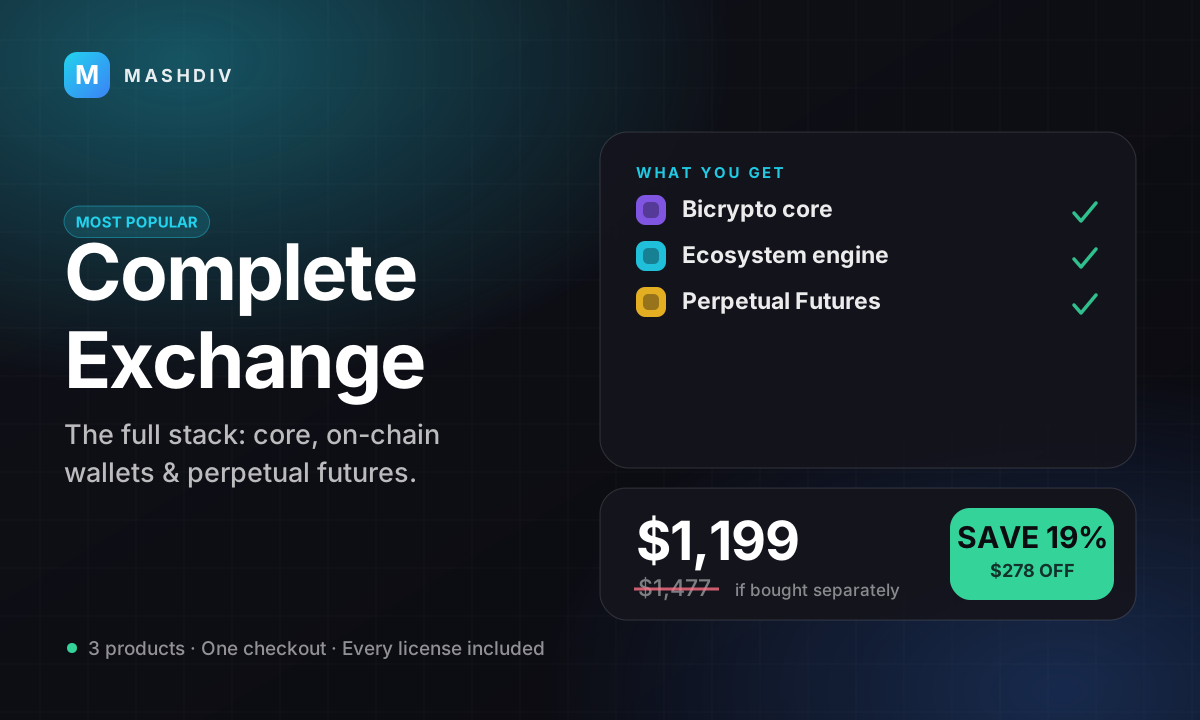
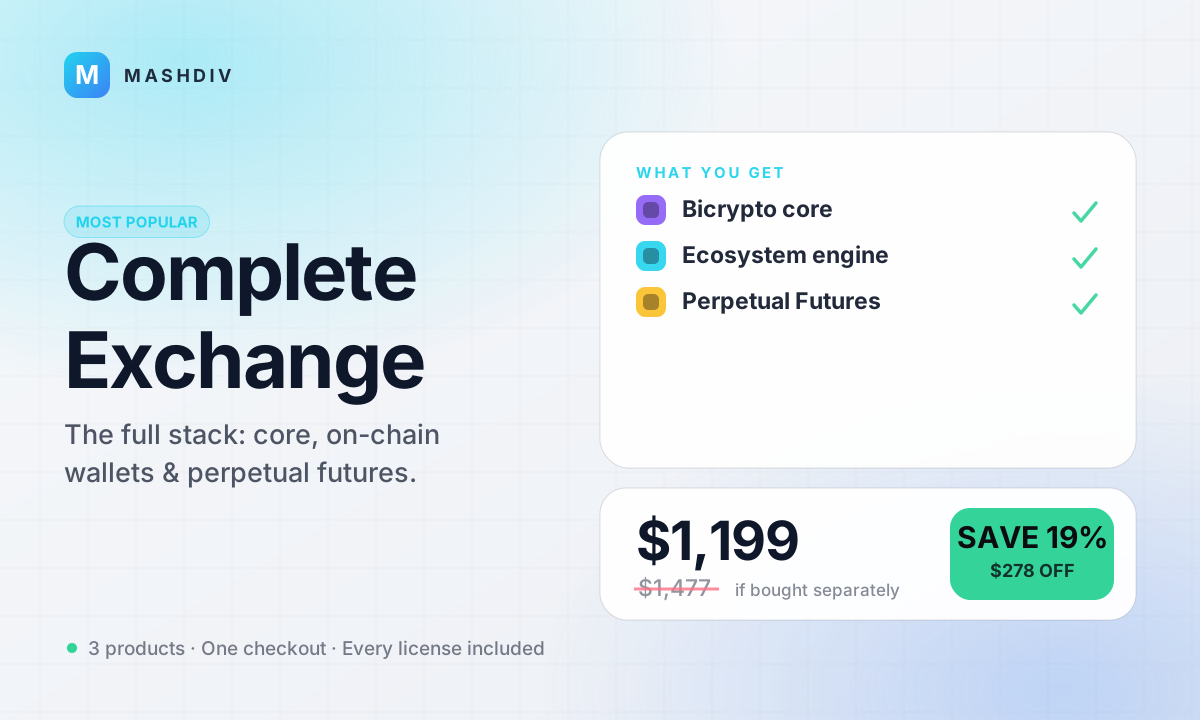
Complete Exchange
Your own engine, your own chains, your own perpetuals — a real exchange, fully owned.
- Bicrypto
- Ecosystem for Bicrypto
- Futures Trading for Bicrypto
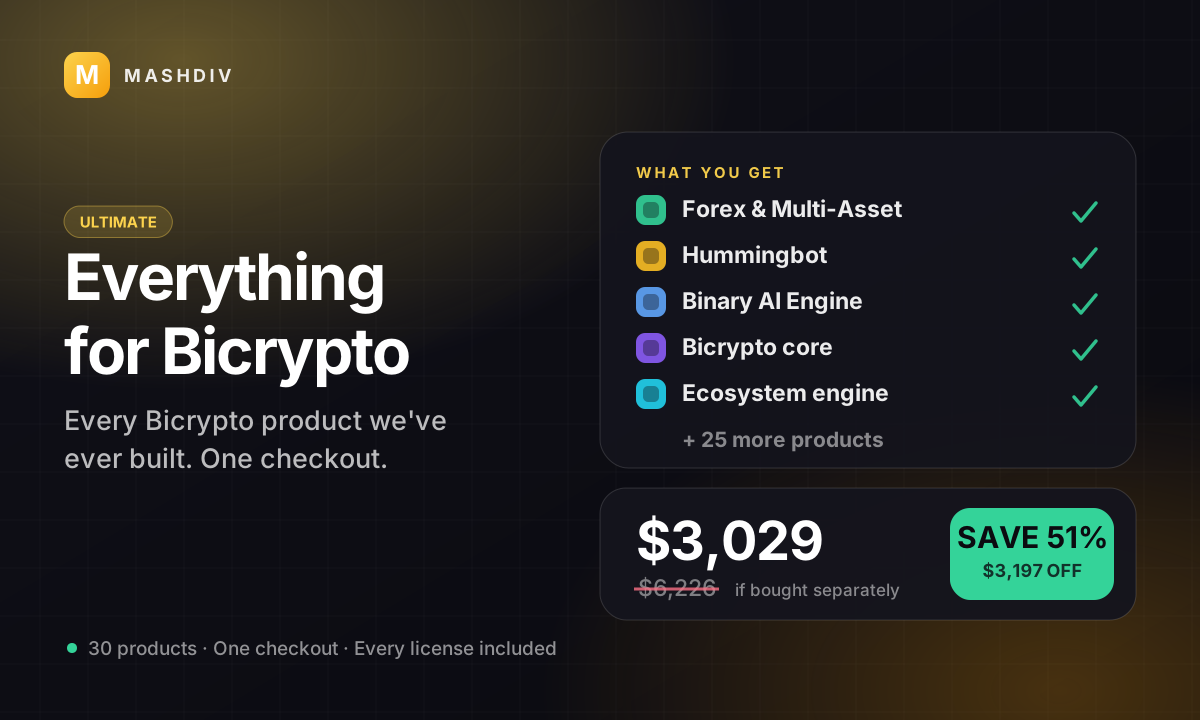
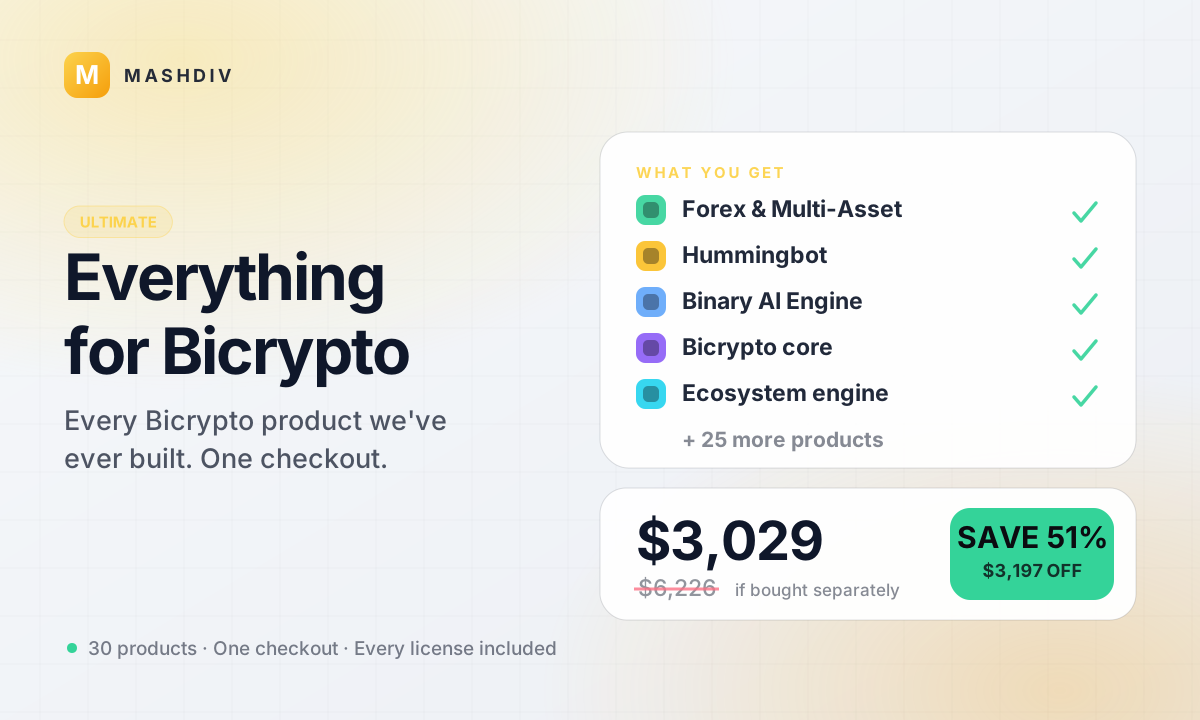 ULTIMATE
Everything for Bicrypto
Every Bicrypto product we make — every addon, every chain, both apps, one price.
- Forex & Multi-Asset Trading
- Hummingbot Connector
- Binary Trading AI Engine for Bicrypto
- Bicrypto
- + 27 more
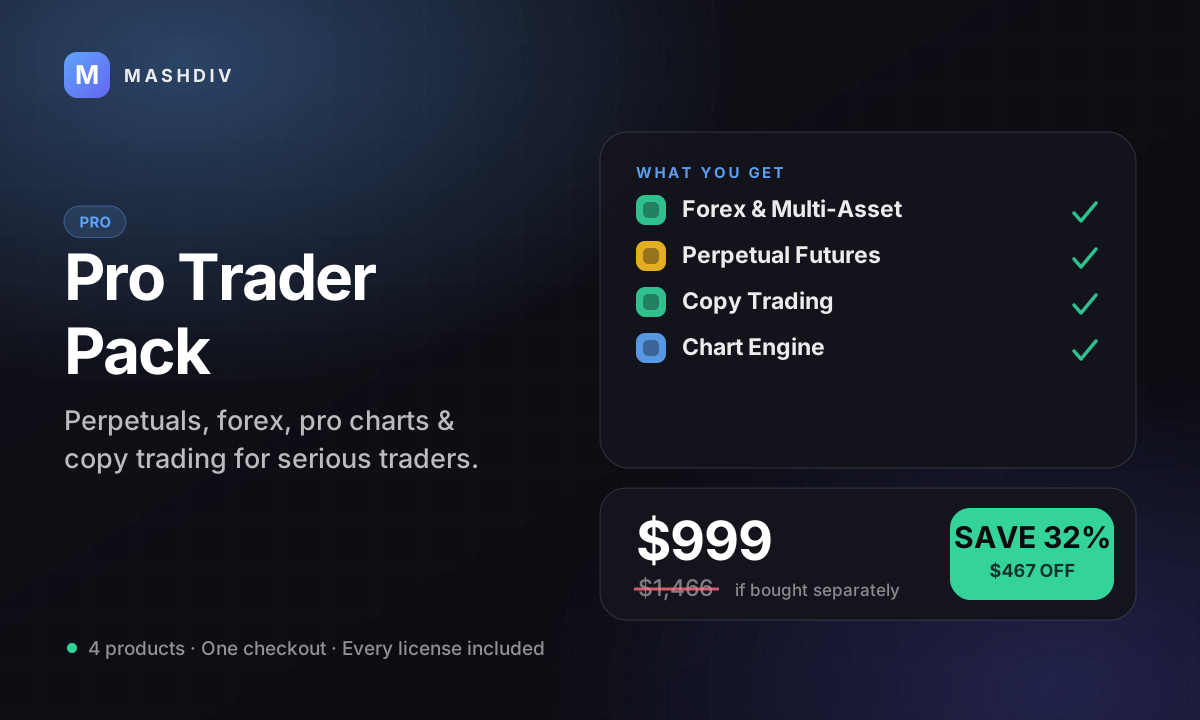
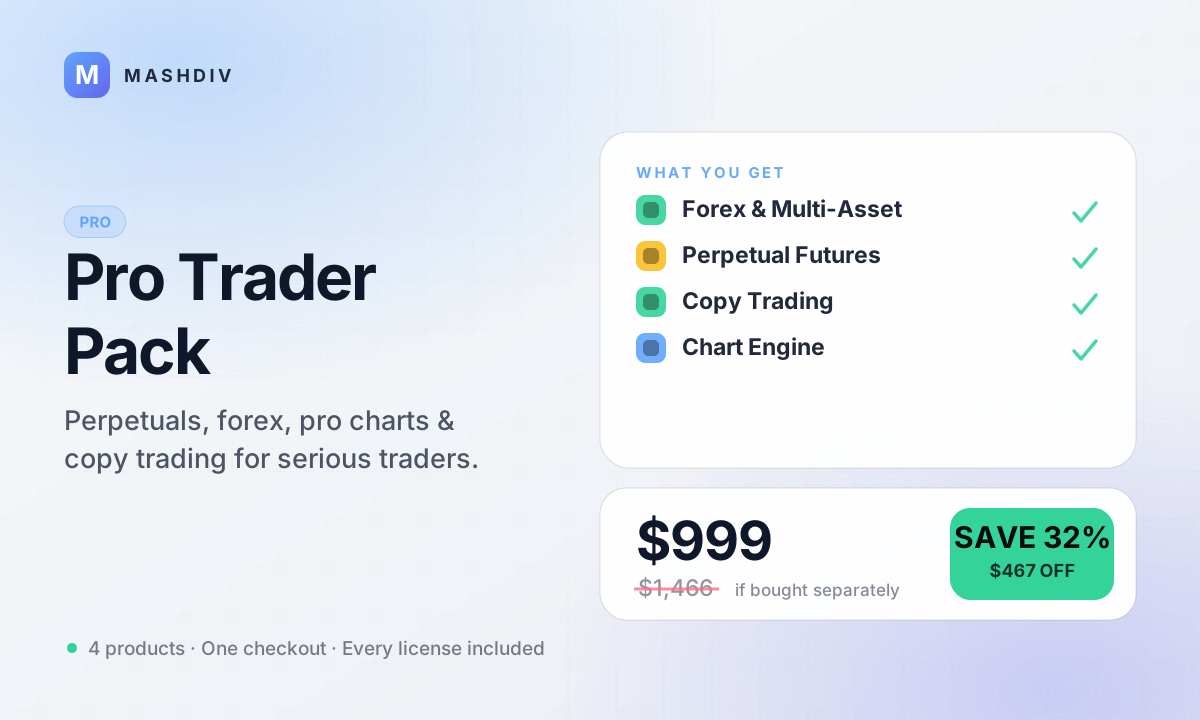 PRO
PROPro Trader Pack
The advanced-trading stack: perpetuals, forex, pro charts, and copy trading.
- Forex & Multi-Asset Trading
- Futures Trading for Bicrypto
- Copy Trading for Bicrypto
- Chart Engine for Bicrypto
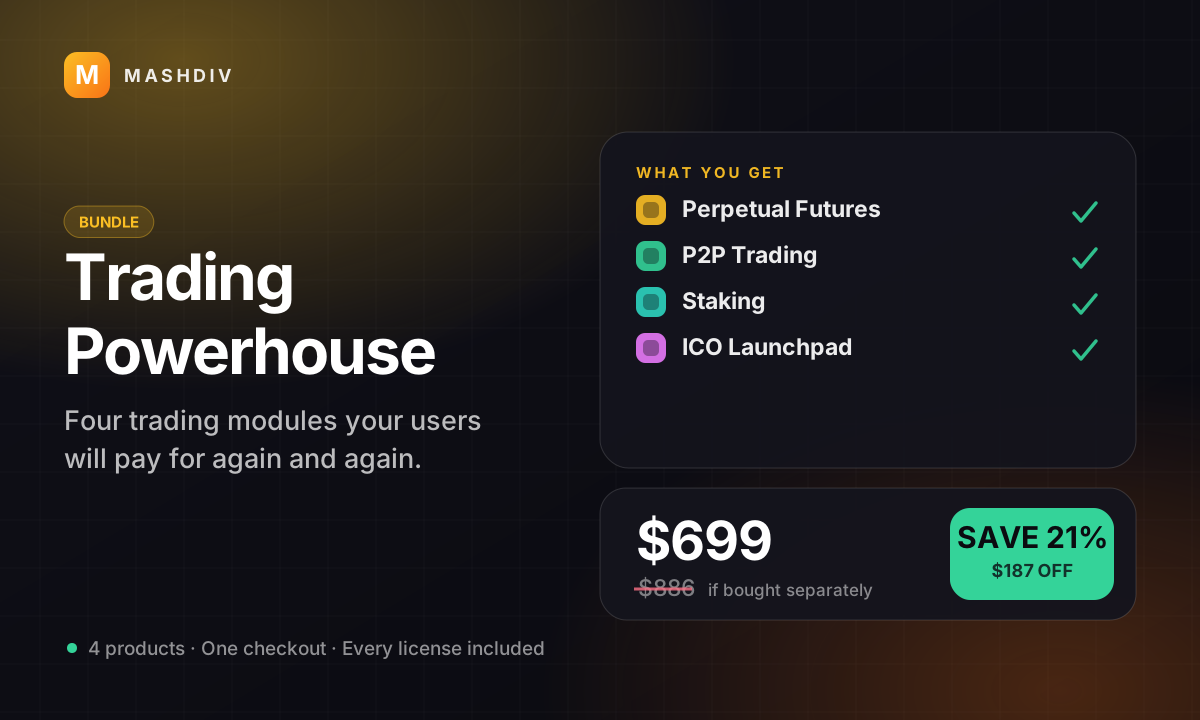
Trading Powerhouse
Four flagship trading products that multiply engagement on any Bicrypto platform.
- Futures Trading for Bicrypto
- P2P Trading for Bicrypto
- Staking for Bicrypto
- ICO/STO/IDO Launchpad for Bicrypto
Keep exploring
Related products
 Addon
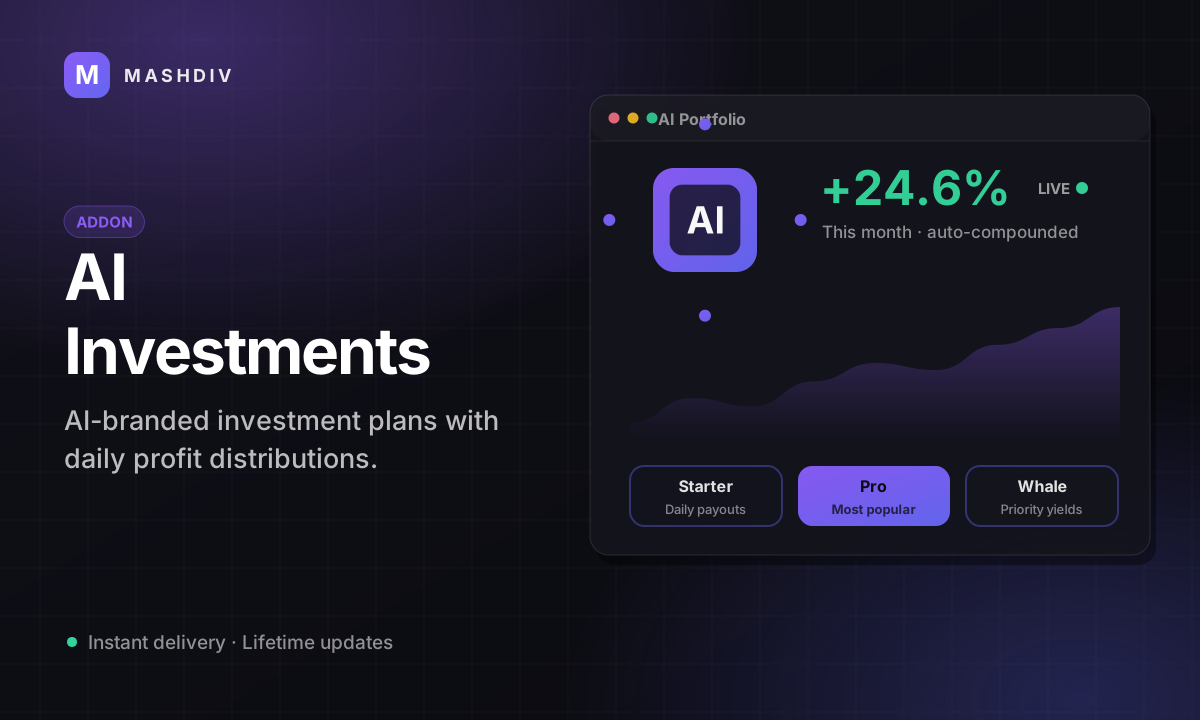
AddonAI Investments for Bicrypto
A duration-based investment product where you set the term, the rate and the outcome — and fund it yourself.
 Addon
AddonForex Investment for Bicrypto
Run a managed forex desk: you set the plan, the term and the payout, and settlement runs itself hourly.

 Addon
AddonMLM & Affiliate System
Your members bring the next ones, and you pay commission only when a referral actually deposits or trades.