MLM & Affiliate System
Your members bring the next ones, and you pay commission only when a referral actually deposits or trades.
- 37 pre-built commission rules — a referral programme that pays on day one
- 16 kinds of activity, so every addon you own becomes a commission stream
- Percentage or fixed rewards per rule, in the wallet and currency you choose
- Direct, binary or unilevel trees with 2 to 7 paid levels of sponsor chain
- An overlap guard refuses a rule that would stack, and quotes the combined rate
- A ceiling on percentage rules, so a delegated admin cannot quietly overpay
- Approval queue holds new referrals until you accept them — or skip it entirely
- Rewards are entitlements until claimed, so a bad rule costs paperwork not money
- Row-locked, idempotent claims that credit a real FIAT, SPOT or ECO wallet
- Every claim records a platform loss, so profit reporting shows net not gross
- Link and QR generator, a public rates page and a network tree for every member
- Unpaid-liability and aged-queue analytics, so you can see what you owe
Inside MLM & Affiliate
Your members are the acquisition channel
A referral link, a network tree, and a commission rule for every kind of activity your platform already processes. You pay when a referral deposits, trades, stakes or contributes — never for a click, never to a third-party network, and never before the reward row is sitting in front of you.
In detail
A referral programme you own outright, wired into every part of the platform your customers already use. A member shares a link, whoever registers through it is recorded as their referral, and activity by that referral — a deposit, a trade, a staking position, an ICO contribution — creates a commission row the member can claim into a platform wallet. No third-party network, no revenue share, and nothing counts clicks: you pay for activity that happened on your own books.
How it works
Thirty-seven commission rules ship, covering sixteen kinds of activity across every addon Bicrypto sells. Fifteen are active on a fresh install and the rest are one switch away. Nineteen are paid the instant the transaction happens, by the code that processed it; the rest by an hourly job that sums each referred user's qualifying volume for the calendar period. Either way the result is an entitlement row, not money. It becomes wallet balance only when the member presses Claim, which credits them inside a locked transaction and records an offsetting platform loss — so your profit report shows what you kept, not what you took.
The configurable surface
| What | Range |
|---|---|
| Commission rules | 37 seeded, 16 activity types, percentage or fixed |
| Payout wallet | FIAT, SPOT or ECO per rule, in a currency you pick |
| Tree structure | Direct, binary or unilevel |
| Payout levels | 2 to 7, each with its own share of the commission |
| Qualifying minimum | Per rule, in that rule's reward currency |
| Payout threshold | One number, on a member's total unclaimed balance |
What operators control
Approve or reject every referral before it earns anything, or leave the queue off and let them start active. Create, adjust and delete referrals and rewards by hand. Set a ceiling no percentage rule may exceed. Turning on a rule that would collect on the same activity as a live one is refused with the combined rate quoted, so you cannot accidentally pay 12% on a screen that reads 10%. The analytics panels lead with what matters: unpaid liability, and how long the oldest application has waited.
Requires Bicrypto core and nothing else — no Ecosystem, no ScyllaDB. Binary and unilevel pay identically: both walk the sponsor chain, and binary placement and spillover are presentation, not economics. Approval is never retroactive, so anything a referral does while pending earns nobody anything. And you enable it as "MLM" in the extension manager but operate it as "Affiliate Program" in the admin menu — searching for MLM finds the extension row and nothing else.
Thirty-seven commission rules ship, and a guard stops them stacking
Deposits, spot and futures trades, binary wins, investments, ICO contributions, staking, P2P, NFT, e-commerce, copy trading and forex all have a seeded rule waiting — 37 of them across 16 kinds of activity. Fifteen are active on a fresh install; the rest are one switch away. Each carries its own rate, reward type, minimum, payout wallet and currency, and the list works out what a referrer actually earns once every competing rule has paid. Turning on a rule that would collect on the same activity as a live one is refused, with the competitor and the combined rate named back to you.
Rules are looked up by their system name, so a rule you invent a new name for is visible everywhere and pays nobody. A rule can be disabled but never deleted — the row stays as the record of what your programme once paid.
Three tree structures, and one payout path underneath all of them
Direct pays the immediate sponsor at the rule's full rate and stops. Binary and unilevel split the same commission across 2 to 7 levels of sponsors, each taking the share you set, and a level with nobody in it is simply not paid — the share is not redistributed upward. The part that surprises everyone: binary and unilevel pay identically. Both resolve their payees by walking the sponsor chain — who invited whom — and neither reads the binary node table, so placement, the two-child limit and spillover change the picture your members look at rather than the money.
The level split belongs to one of the two engines. Twenty rules fire at the moment of the transaction and divide the commission the way this diagram shows; the other seventeen are paid by an hourly job that credits the immediate referrer only, at the rule's full rate.
Two engines create the commission, and one of them keeps a log
Twenty of the 37 rules are paid by the code that just processed the transaction, in the same moment it completes. The other seventeen are left to an hourly job that re-reads the ledger for the current calendar period and the one just closed, prices each referred member's qualifying volume into the rule's reward currency, and writes one reward row per referred member per period. It skips every event-driven rule by name so nothing is ever paid twice, and it reports into the same cron console every other scheduled job on the platform uses — naming the rules it skipped, the currencies it had no exchange rate for and therefore excluded from the volume, and each reward it created. On an untouched install thirteen of the fifteen active rules pay on the event, and only Deposit Commission and Spot Trade Commission reach the job.
The hourly job creates rows and moves no money — and it credits the immediate referrer at the rule's full rate, with no level split. A rule's daily, weekly or monthly window is a real database column that no screen exposes, so everything runs daily unless you edit the row.
An approval queue, with the clock on it out in the open
Turn Require Approval on and every new referral lands PENDING and earns nothing until you accept it — which is also the moment it is placed in the tree, so an application you were never going to approve cannot occupy a binary child slot. Reject it and the node is detached, the parent's slot freed and any children re-parented rather than orphaned. Admins can create, adjust and delete referrals and rewards by hand, and the Referrals panel leads with how many applications have been sitting longer than a week.
Approval is never retroactive: anything a referral did while it sat pending earns nobody anything, then or later. Require Approval ships off — turn it on only if you will work the queue daily.
The programme is a liability, and the screen leads with it
The Rewards panel opens on Unpaid Liability: every commission earned and not yet collected, folded into one figure through each rule's own reward currency, with any currency the platform has no rate for named on the card rather than quietly counted as zero. Beside it are the two numbers that say whether that figure is patience or a broken claim flow — how much has sat unclaimed for more than ninety days, and how old the oldest unclaimed reward is. A ranked bar shows which rules the obligation is sitting under, and a claim rate measured by value rather than by row count, because a ninety-percent claim rate on rows hides the case where the three largest rewards are the unclaimed ones. Nothing on that list expires and nothing pays it down on a schedule; a reward leaves your books when the member presses Claim, and not before.
Claiming credits the member's wallet and writes an offsetting platform-loss entry, so the profit report shows commissions paid against fees collected instead of gross revenue as if it were net. Marking a reward claimed from the admin table is bookkeeping only and credits nobody.
- commission rules ship
- 37
- kinds of activity covered
- 16
- levels of sponsor chain
- 7
- tree structures
- 3
Everything included
75 capabilities, in 8 areas
Every item below exists in the source you receive. Nothing here is a roadmap.
Referral links and sign-up
How somebody becomes somebody else's referral.
- A referral link for every registered member — no opt-in, no affiliate flag
- Short /ref/<code> links that open registration with the code attached
- The code held for the browsing session, so a visitor can arrive, browse and register later
- The referrer's name and avatar shown on the registration form
- Campaign, source and custom parameters appended to a link for your own analytics
- A QR code of the link, with a size and colour picker
- Ready-made social and email invitation copy, one press to the clipboard
- Self-referral refused, and one sponsor per member enforced in the schema
The approval queue
The switch that decides whether a new referral earns immediately.
- PENDING, ACTIVE and REJECTED referral states
- Require Approval as one switch — off on a fresh install
- A pending referral earns nothing and holds no position in the tree
- Placement happens at approval, so an application never occupies a binary child slot
- Rejection detaches the node, frees the parent's slot and re-parents its children
- Referral-loop detection refusing anyone who is already an upline
- An approval-age card: how many applications have waited longer than a week
- Approve, reject, edit, soft-delete, restore or bulk-delete any referral
- Manual referral creation for a relationship that never came through a link
The commission rulebook
What earns a commission, how much, and what stops two rules stacking.
- 37 commission rules seeded, 15 of them active on a fresh install
- Sixteen kinds of activity — deposits, spot, binary, futures, investments, ICO, staking, P2P, NFT, e-commerce, copy trading and forex
- Percentage or fixed reward, set per rule
- Payout wallet per rule: fiat, spot or ecosystem
- Reward currency per rule, and a chain for ecosystem wallets
- A minimum qualifying amount per rule
- Overlap analysis on every row: the competing rules, the ledger types they share, and the effective rate a referrer really earns
- Enabling a rule that competes with a live one is refused until you acknowledge it
- A server-side ceiling on percentage rewards
- Each competing rule in the overlap warning named with the engine that pays it — the event, or the periodic evaluator
- Member-facing title and description edited per rule
- Bulk enable and disable — a rule is disabled, never deleted
- Rules belonging to an addon you do not run are hidden from members
Tree structures and levels
Who is paid out of one commission, and how it is split.
- Direct: the immediate sponsor, at the rule's full rate
- Binary: a two-child tree with breadth-first spillover when a slot is full
- Unilevel: unlimited children under any node
- 2 to 7 paid levels of sponsor chain under binary and unilevel
- An independently set share per level
- A running level total on screen, and a hard stop above 100%
- A level with nobody in it is skipped, and its share is not redistributed
- The upline walk stops at the top of a chain and at any cycle
- Structure switched with one setting, no restart
Paying the commission
Two engines, and the reason they never pay the same activity twice.
- 20 rules paid the instant the transaction happens, by the code that processed it
- An hourly evaluator for the rest, re-reading the ledger per calendar period
- The evaluator skips every event-driven rule by name, so nothing is paid twice
- Qualifying volume priced into the rule's reward currency before it is summed
- A deterministic, unique-indexed source id — one reward per member per period
- Each run covers the current period and the one just closed
- The referrer's payout wallet created alongside a new reward
- An in-app notification to the referrer, and one to the admin desk, on every event-paid reward
- A per-run log naming every reward created, every rule skipped and every currency it could not price
- The job registers and deregisters with the extension, and reports in the cron monitor
Money out
The step between an earned commission and a wallet balance.
- A reward is an entitlement until the member presses Claim
- Claiming credits the fiat, spot or ecosystem wallet the rule names
- Row-locked and idempotent, so a double press pays once
- A payout threshold on the member's total unclaimed balance
- A KYC feature gate on claiming, enforced server-side
- An offsetting platform-loss entry per claim, so profit reporting is net
- A wallet created on demand for a member who has none
What members see
Seven screens under one Affiliate Program menu entry.
- A public programme page: affiliate count, total paid out, average monthly earning, activation rate
- The top five earners and the last 30 days of rewards, shown without names
- A dashboard over 1, 3, 6 or 12 months, every figure against the previous period
- A monthly earnings chart
- An interactive network tree with zoom, pan and a card per member
- A level breakdown showing how many members sit at each depth
- A paginated list of the people they introduced
- Reward history with search, a claimed filter and sorting by amount or date
- A commission-rates page filtered to the addons you actually run
The admin desk
Six screens, and the numbers you take to an accountant.
- Four headline metrics, each against the previous month
- Twelve months of earnings, the referral status split and top performers
- A pending queue: referrals to approve, rewards awaiting payout with a total, rewards paid
- A stalled-affiliate detector — introduced somebody recently, earned nothing since
- Referral analytics: six cards, a status donut, an inflow chart and a top-referrer ranking
- Reward analytics: ten cards, a claim donut, liability by rule, accrual against payout and a top-earner ranking
- Unpaid liability priced into one currency, naming any currency it could not price
- A per-affiliate screen with their downline table and six months of earnings
- Manual reward creation against any referrer and rule
- An affiliate tab on the CRM user record
- Licence
- Addon licence activated in the extension manager and bound to that machine. A valid licence and the enable switch are two separate steps.
- Requires
- Bicrypto core, and nothing else — no ScyllaDB, no extra services, no environment variables
- Runs on
- The platform you already have: same frontend, same backend, same MySQL database. Nothing to unzip or compile.
- Processes
- None of its own. One hourly job inside the platform's existing cron worker.
- Screens
- 13 — six in the admin panel, seven for members
- API surface
- 36 endpoints: 25 admin, 11 member
- Access control
- 15 permission keys, plus two KYC feature gates
- Settings
- 8, plus one percentage box per paid level
- Data
- Five tables: referrals, commission rules, rewards, and one node table per tree type
- Commission rules
- 37 seeded across 16 activity types; 15 active out of the box
- Earns from
- Staking, ICO, P2P, NFT, e-commerce, futures, copy trading, AI investments, forex and forex trading all have seeded rules — you collect on the ones you own
- Nothing counts a click
- There is no click, impression or campaign tracking. Attribution is a registration through a link and nothing else, so the campaign, source and custom parameters on the generator are for your own analytics — no screen breaks referrals down by them.
- Attribution lasts one browsing session
- The referral code is held in the browser's session storage. Close the tab before registering and the attribution is gone. There is no cookie and no configurable window.
- Binary and unilevel pay identically
- Both resolve payees by walking the sponsor chain — who invited whom. Binary placement, the two-child limit and spillover change the diagram members look at, not the money.
- Payouts are pulled, never scheduled
- Every payout happens because a member pressed Claim. There is no scheduled disbursement, no partial payout, and an unclaimed reward never expires — it sits on your books until somebody collects it.
- One rate card for everybody
- There are no per-affiliate overrides and no tiers. To pay one person more, create a reward for them by hand.
- Approval is never retroactive
- Anything a referral does while it sits PENDING earns nobody anything, then or later. Run the queue only if you will work it daily.
- Admin reward actions move no money
- Create, edit, delete and mark-claimed are bookkeeping on the reward table — marking one claimed credits no wallet. Manual creation is an API call; the reward table itself has no Create button.
- The evaluation window is a database column
- A rule's daily, weekly or monthly window is real in the engine but is exposed by no endpoint and no screen. Everything runs daily unless you edit the row directly.
- On-chain payouts need Ecosystem
- A rule can pay into an ECO wallet without it — the claim falls back to a plain wallet row with no on-chain address behind it. Pay in SPOT unless you run Ecosystem.
- The QR picture needs outbound internet
- The link itself is built in the browser, but the QR image is rendered by an external QR service. On a server with no outbound access that one tab shows a broken image; nothing else depends on it.
Loved by customers
Reviews
No reviews yet. Own it? Share your experience.
Own this product? Sign in to leave a review.
Better together
Bundles containing this product
Get MLM & Affiliate System for less as part of a bundle.
 ULTIMATE
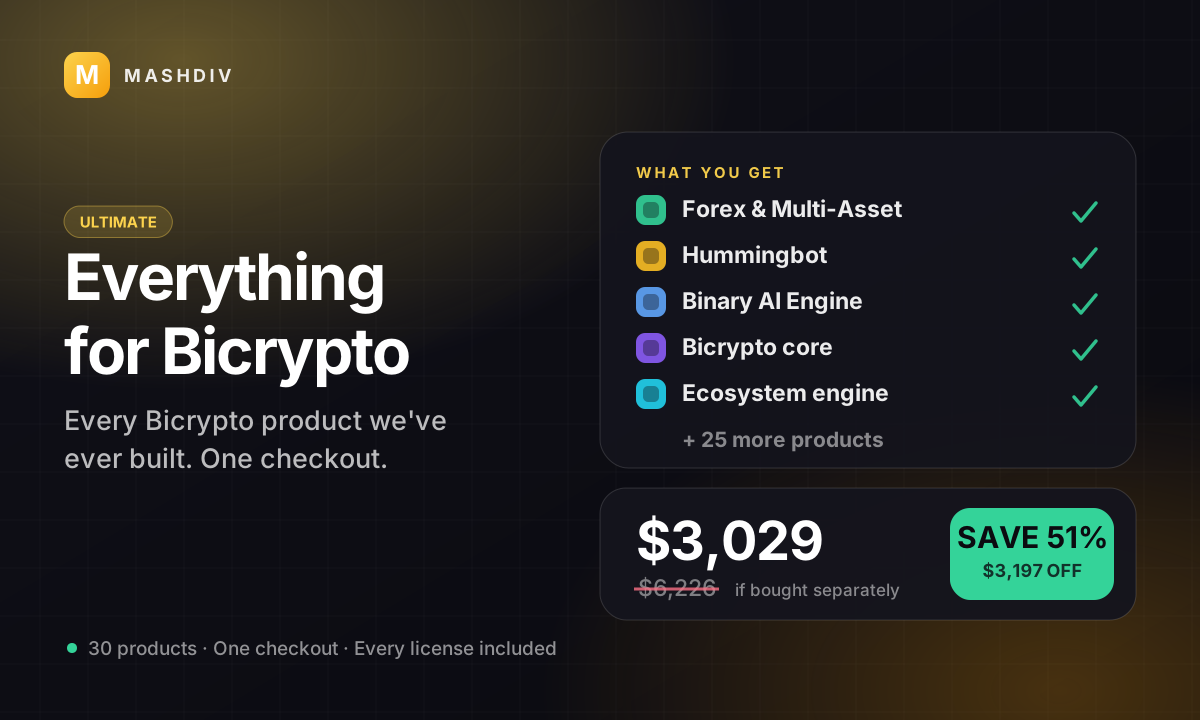
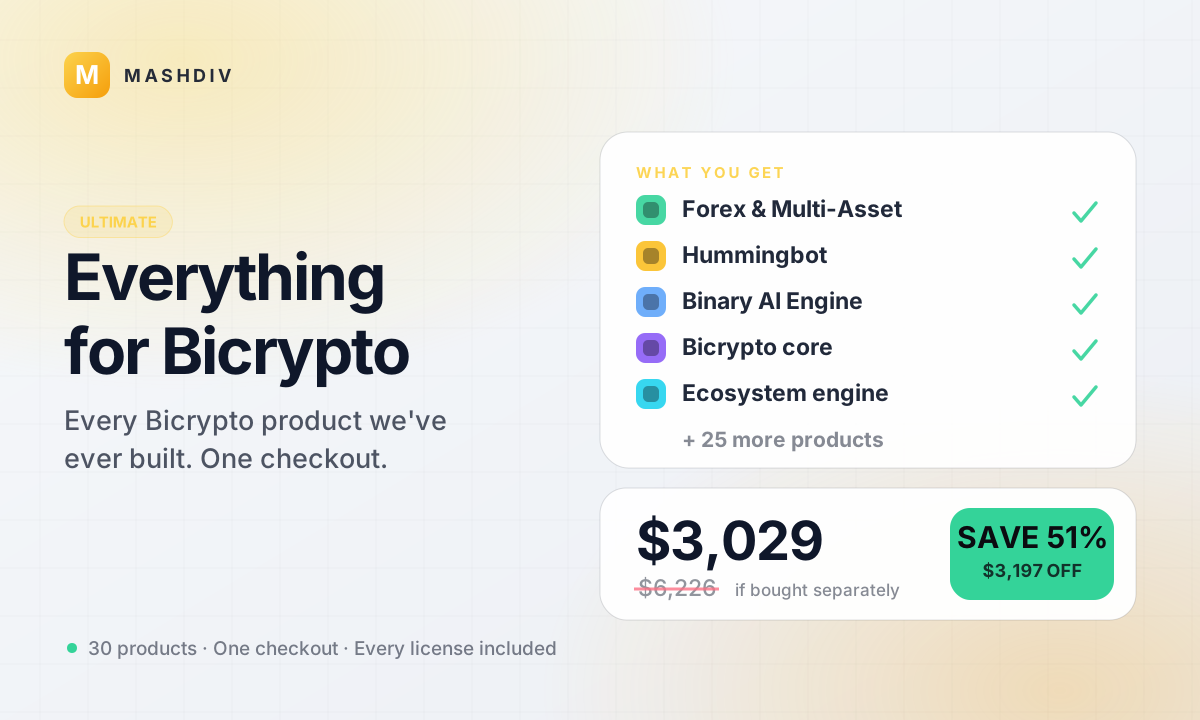
Everything for Bicrypto
Every Bicrypto product we make — every addon, every chain, both apps, one price.
- Forex & Multi-Asset Trading
- Hummingbot Connector
- Binary Trading AI Engine for Bicrypto
- Bicrypto
- + 27 more

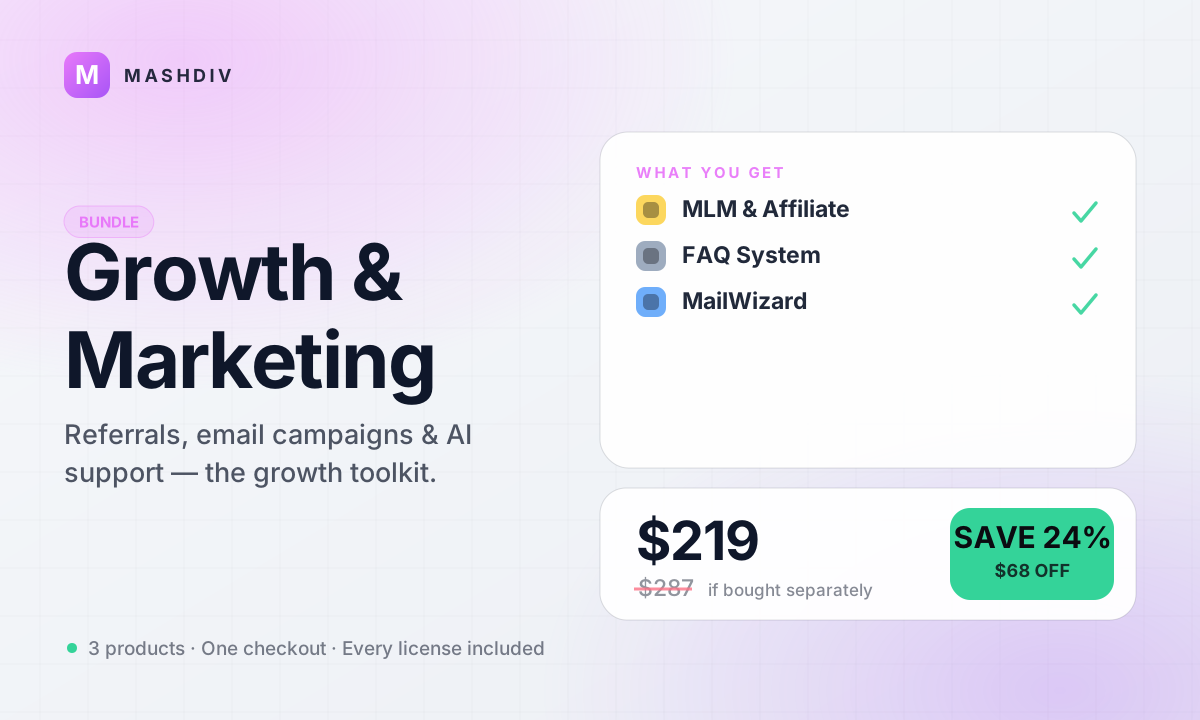
Growth & Marketing Pack
Acquire, activate, and retain — the complete growth toolkit for your exchange.
- MLM & Affiliate System
- FAQ System for Bicrypto
- MailWizard for Bicrypto
- AI Support Agent for Bicrypto
Keep exploring
Related products

 Addon
AddonAI Investments for Bicrypto
A duration-based investment product where you set the term, the rate and the outcome — and fund it yourself.
 Addon
AddonForex Investment for Bicrypto
Run a managed forex desk: you set the plan, the term and the payout, and settlement runs itself hourly.
 Addon
AddonICO/STO/IDO Launchpad for Bicrypto
Host token sales for third-party projects — and hold every contribution in escrow until the project delivers.