ICO/STO/IDO Launchpad for Bicrypto
Host token sales for third-party projects — and hold every contribution in escrow until the project delivers.
- Escrow holds every contribution until you verify the on-chain delivery
- Creators pay a launch fee from their wallet before they reach your queue
- Nothing goes live without you — every offering arrives PENDING for review
- Six moderation actions, each emailed to the owner and written to an audit log
- Priced phases hand over when they sell out, not when a calendar says so
- A platform fee on every contribution, charged on top and routed to you
- A failed sale refunds every contributor from the escrow that held them
- Super Admin emergency cancel refunds a live sale in a single action
- Linear, cliff and milestone vesting, frozen per buyer at the moment of purchase
- Receiving addresses are format-checked against the sale's own chain
- Limits, fee and soft cap are read fresh on every purchase — no restart
- Runs on Bicrypto alone: no exchange feed, no blockchain node, no extra database
Inside the ICO Launchpad
Other people's token sales, run on your terms
Projects pay you to list, your users contribute from wallets they already hold, and the platform holds every contribution in escrow until the tokens have actually been delivered. You decide what is approved, what is released and what is handed back.
In detail
Your install becomes a launchpad that other people's projects pay to use. A creator buys a launch plan, describes their token, prices the sale in phases and submits it for review. You approve it, your users contribute from wallets they already hold, and the platform keeps every contribution in escrow until the project has delivered and you have checked it. Two revenue lines fall out: a listing fee on every launch, and your cut of every contribution.
How it works
The creator works through a ten-step launch form and pays the plan fee from their wallet, inside the same transaction that writes the offering — a failed launch is never a charged one. It lands in your queue as PENDING, invisible to investors until you approve it. An investor then enters an amount and the address they want tokens sent to: their wallet is debited, your fee is taken on top, and the principal goes to escrow. The creator sends tokens from their own treasury and records the transaction hash, putting the contribution on your desk. Verify it and escrow pays the creator; reject it and the buyer is refunded.
The sale you define
| Surface | What it sets |
|---|---|
| Launch plans | The listing fee, plus the currency and wallet type of every contribution |
| Phases | Name, token price and allocation — the lowest phase with tokens left is the one selling |
| Vesting | LINEAR, CLIFF or MILESTONE, 1–120 months, up to 36 milestones |
| Limits | Minimum, maximum and per-user caps, plus your fee percentage |
| Soft cap | The share of target a sale must reach, or it fails and refunds everybody |
| Blockchains | The chains creators may launch on, and what addresses are checked against |
What operators control
Six moderation actions — approve, reject with notes, pause, resume, flag and unflag — each emailed to the project owner and written to the addon's activity log. Pause is the only one that stops the money. A Super Admin can cancel a live sale and refund every contributor in one action. Limits, the fee and the soft cap are read fresh on every purchase, so a change applies immediately, including to sales already running.
The platform never holds the token being sold. It escrows the payment currency; the project sends its own tokens, on-chain, from its own treasury. Vesting is a dated schedule of obligations rather than a locked balance, so your only leverage over a project that stops delivering is escrow you have not released yet. Review offerings properly before you approve them. Requires Bicrypto core and nothing else: no exchange feed, no blockchain node, no extra database.
Escrow is the product, and you are the one holding it
A contribution debits the buyer's wallet and credits the platform escrow inside one database transaction. It stays there while the contribution is PENDING and while it is in VERIFICATION, and it moves only when you act: verify the creator's delivery and the whole amount lands in their wallet; reject it and the buyer is refunded, the tokens go back on the phase that sold them, and any vesting behind it is cancelled. A sale that ends below its soft cap hands every outstanding contribution back on its own, on the hour.
A delivery hash is checked for shape against the sale's chain — the platform never queries a chain. Open the explorer yourself before you verify, because there is no partial release: verifying pays out the whole contribution.
Projects pay to be here, and nothing goes live without you
A creator works through a ten-step launch form and pays their plan's fee from their own wallet, inside the same transaction that writes the offering, so a failed launch is never a charged one. It arrives in your queue as PENDING and stays invisible to investors until you approve it. Six actions run that desk — approve, reject with notes, pause, resume, flag and unflag — each one written to the addon's activity log and announced to the project owner in the app, and four of the six email them as well. Pause is the one that stops the money; flag only marks the file.
Three of a launch plan's ten feature fields are enforced by the server: team members, roadmap items and phases. Support level, audit, priority listing and the kycRequired flag are plan-card copy for a service you deliver by hand — price them that way. The plan also fixes the currency and wallet type of every contribution to that sale, and nothing can change it afterwards.
Vesting is a delivery schedule, not a locked balance
The platform never holds the token being sold, so nothing drips out of a wallet here. Choosing linear, cliff or milestone vesting produces a dated list of obligations instead: on each tranche date the creator owes an on-chain transfer from their own treasury and records the hash against that tranche, and the hourly sweep announces the ones that have come due. Terms are frozen per buyer at the moment of purchase, so correcting an offering later can never rewrite an entitlement somebody already bought.
Escrow is released on the first tranche, not the last — no project can finance a year of held funds — so after that the only pressure keeping a creator delivering is reputational. Do the multiplication before you approve one: a twelve-month schedule across two hundred buyers is 2,400 transfers, made by hand.
A sale that misses the floor hands the money back by itself
Every hour a job looks for offerings whose end date has passed and compares what they raised against the soft cap you set — a share of target, 30% out of the box, one figure for every sale on the platform. Clear it and the offering is marked SUCCESS and nothing moves. Miss it and the offering is marked FAILED and every contribution still sitting in escrow is returned in the same pass: the buyer is credited out of the escrow wallet, the tokens go back on the phase that sold them, the vesting schedule behind them is cancelled and the participant count is recounted. Each offering settles inside its own database transaction, so a large sale handing money back does not hold up staking, investments or anything else on the platform. Cancelling a live sale outright runs the same sweep, behind a reason you have to type.
A contribution you already verified and released is not swept back — it still counts toward the raise, but that money is with the creator and the sweep only reaches what is in escrow. Nothing here happens without the platform's cron process: if it is not running, an ended sale stays ACTIVE and every contributor's money stays where it is.
- steps in the launch form
- 10
- moderation actions
- 6
- vesting shapes
- 3
- blockchain nodes to run
- 0
Everything included
96 capabilities, in 8 areas
Every item below exists in the source you receive. Nothing here is a roadmap.
Review and moderation
The gate between a project's submission and your users' money.
- Every offering arrives PENDING and stays invisible to investors
- Six moderation actions on one desk: approve, reject, pause, resume, flag, unflag
- Rejection requires notes, stored on the offering and sent to the creator
- Pause stops the money; flag marks the file without stopping a sale
- Per-status queues for pending, active, successful, failed, rejected and cancelled
- Review queue banded against a 72-hour approval budget, with the oldest wait named
- Offering detail carrying funding over time, contributions, vesting, phases and plan
- Edit a live offering: name, symbol, icon, website, target, price, dates, chain, supply
- Append a phase, which extends the sale's end date
- Delete an unsold phase and recompute the end date
- Feature an offering onto the public landing strip
- Delete a spam or duplicate submission
- Super Admin emergency cancel with a mandatory reason, refunding every contribution still in escrow
- Create an offering on a creator's behalf, with no launch fee charged
- Fourteen-panel analytics view over the offerings queue
- Per-offering activity log written by eleven separate actions
Escrow, fees and payouts
Where the money sits, and every door it can leave by.
- Contribution debit and escrow credit inside one database transaction
- Escrow held on the Super Admin wallet, created on demand in the sale's currency
- Seven separately-referenced ledger legs per contribution
- Launch fee taken in the same transaction that writes the offering
- Platform fee charged on top of every contribution and routed to your revenue
- Verify a delivery: the full contribution value moves from escrow to the creator
- Reject a delivery: buyer refunded, tokens returned to the phase that sold them
- Automatic refund of every contribution still in escrow when a sale ends below its soft cap
- Manual refund run on a failed or cancelled offering
- Refund eligibility check open to the creator, an administrator or any contributor
- One completed refund per contribution, whichever door is used
- Wallet debits keyed to the contribution row, so a resubmitted purchase cannot charge twice
- Administrative notes merged into a contribution's record rather than over it
- Affiliate rewards paid to the buyer's referrer on every contribution
- Fifteen-panel analytics view over the transaction desk
Launch plans, phases and pricing
The shape of a sale, and the parts of it you decide.
- Launch plans with price, currency, wallet type, sort order and a recommended flag
- The plan fixes the purchase currency and wallet type of every contribution
- Server-enforced plan caps on team members, roadmap items and offering phases
- Enable, disable and soft-delete a plan without touching the offerings on it
- Creator plan upgrade that raises the caps and changes nothing already sold
- Priced phases with name, price, allocation, remaining supply, duration and sequence
- The selling phase is the lowest sequence with tokens left, not the one the calendar says
- Sale end date derived from the sum of the phase durations
- Two independent caps: allocation in tokens, target amount in the purchase currency
- Platform-wide soft cap deciding success or failure at settlement
- Blockchain list whose stored value drives address and hash checking
- Token type list — ERC-20, BEP-20, SPL or whatever you enter — shown on the offer page
Contributions and the investor's account
What a buyer does, and what they can see afterwards.
- Contribute from a spot, fiat or ecosystem wallet, whichever the sale's plan names
- Eight pre-purchase checks, each with its own message
- Receiving address captured at purchase and format-checked against the sale's chain
- Minimum, maximum and per-user contribution limits, read fresh on every purchase
- Creators refused from contributing to their own offering
- Five contribution states: pending, verification, released, rejected, refunded
- Portfolio overview, investment list and performance series
- Contribution history with a detail page per contribution
- Vesting tab listing every schedule and tranche the user holds
- Email and in-app notification to both buyer and project on every contribution
- Purchase route rate-limited under the platform's order limiter
Delivery and vesting
How a project records what it sent, and what it owes next.
- Creator delivery desk with server-side counts for each contribution state
- Record a delivery hash as a bare hash or a block-explorer URL
- Per-chain hash format checking for ethereum, bsc, polygon, bitcoin and solana
- Three vesting shapes: linear, cliff and milestone
- One to 120 months, up to 36 milestones, percentages that must sum to 100
- Tranches materialised against the buyer's own amount at purchase and frozen there
- The last tranche absorbs the rounding, so tranches sum to exactly what was bought
- Month arithmetic clamped to the month end: a 31 January purchase vests in February
- Per-tranche release door that refuses a tranche before its date
- Vesting tiles: schedules, tranches due now, amount due and delivered
- Schedule states active, completed, cancelled; tranche states pending, released, failed, cancelled
- Hourly sweep announcing due tranches to both sides and closing finished schedules
- Whole-allocation release refused on a contribution that vests
The creator's console
The half of the product your customer's customer uses.
- Creator dashboard with total raised, active offers and a success rate
- Funds-raised performance chart
- Investor list across every offering the creator owns
- My Tokens list bucketed into active, pending and successful
- Ten-step launch form with per-step validation and a review screen
- Team member profiles with bio, avatar and social links
- Roadmap items with dates and a completed flag
- Project update posts with attachments
- Token simulator with distribution, vesting and projection views, writing nothing
- Plan upgrade screen
The public storefront
What a visitor sees before they have an account.
- Landing page with platform stats, featured offerings and upcoming projects
- Success stories and a blockchain-diversity breakdown on the same page
- Offer browser with search, blockchain and token-type filters
- Seven sort orders and paginated results
- Active, upcoming and completed tabs
- Offer detail with progress bar, current phase, countdown and an investment form
- Details, team and roadmap tabs on every offering
- Platform announcement banner across every ICO page
- Offer, stats, blockchain, token-type and plan lists readable without an account
Settings and operations
What you need to run it on a Tuesday afternoon.
- Six-tab settings page: investment, compliance, announcement, blockchains, token types, launch plans
- Ten settings keys read by the running code, applied with no restart
- Maintenance mode that refuses purchases and launches with a maintenance message
- Announcement banner switch and message
- Vesting availability switch and a default duration for the launch form
- Fifteen permission keys across offerings, transactions, settings and statistics
- KYC gating through two platform features: token-sale participation and token-sale creation
- Two hourly cron jobs reporting per-run status on the platform's cron panel
- One database transaction per offering at settlement, so a big refund blocks nothing else
- Admin dashboard with the aged queue, four whole-table tiles, a status split and an activity feed
- Licence
- Addon licence, activated with your purchase code and bound to the machine it runs on
- Requires
- Bicrypto core, and nothing else — no exchange provider, no Ecosystem, no second addon
- Runs on
- Your existing Bicrypto install. It adds no service: no blockchain node, no exchange feed, no extra database.
- Processes
- None of its own. Two hourly jobs run inside the cron process core already starts.
- Storage
- 13 tables, created on the first boot after you enable it
- Screens
- 21 — eight admin screens, thirteen for creators and investors
- Routes
- 77 endpoints — 42 investor and creator, 35 admin
- Access control
- 15 permission keys, none granted to any role by default
- Money in
- Spot, fiat or ecosystem wallets — the launch plan fixes which, per sale
- Escrow account
- The Super Admin account holds every contribution, in a wallet created on demand in the sale's currency
- Vesting
- Linear, cliff or milestone — 1 to 120 months, up to 36 milestones
- It never touches a chain
- The platform escrows the payment currency, not the token. Nothing is minted, deployed or transferred here — the project sends its own tokens from its own treasury.
- Hashes are checked for shape, not for truth
- Only ethereum, bsc, polygon, bitcoin and solana have a real format check, and any other chain value accepts almost any string. Nothing queries a block explorer. Verification is your decision, made by hand.
- No partial escrow release
- Verifying a contribution pays out the whole thing — including on the first tranche of a twelve-month schedule, after which nothing is held back.
- Vesting delivery is manual, for its whole term
- Every tranche is an on-chain transfer plus a hash submission by the creator, per buyer. A twelve-month schedule across two hundred buyers is 2,400 transfers.
- Three reference tables ship empty
- Launch plans, blockchains and token types have no rows on install. Until you seed all three, the launch form dead-ends and nobody can submit anything.
- Nothing settles without the cron process
- The hourly job is the only thing that ends a sale or refunds a failed one. Without it, ended offerings sit active forever and every contributor's money stays in escrow.
- Most of a launch plan's feature block is a price list, not policy
- Three of its ten fields are enforced by the server — team members, roadmap items, phases. Update posts are capped in the browser only, and support level, marketing, audit, tokenomics, priority listing and the KYC flag are read by nothing. Price them as services you deliver.
- A sale's currency is fixed at launch
- The plan sets the purchase currency and wallet type, and no screen changes them afterwards. Run one plan per currency you want sales denominated in.
Loved by customers
Reviews
No reviews yet. Own it? Share your experience.
Own this product? Sign in to leave a review.
Better together
Bundles containing this product
Get ICO/STO/IDO Launchpad for Bicrypto for less as part of a bundle.
 ULTIMATE
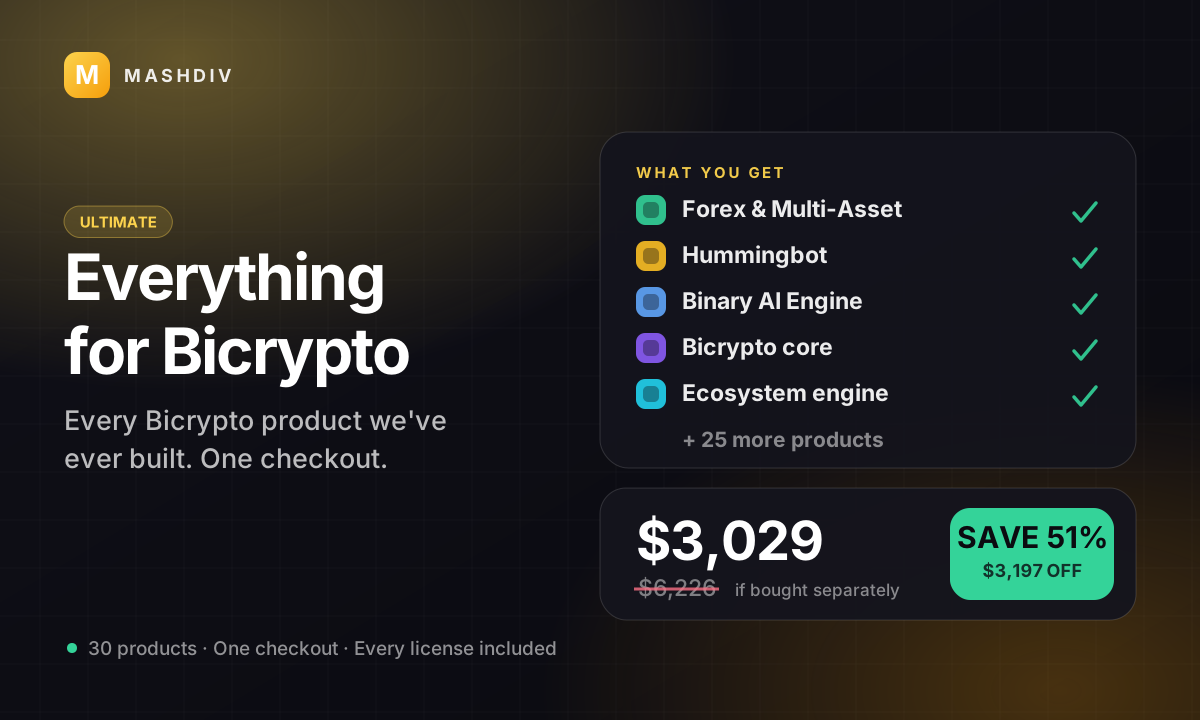
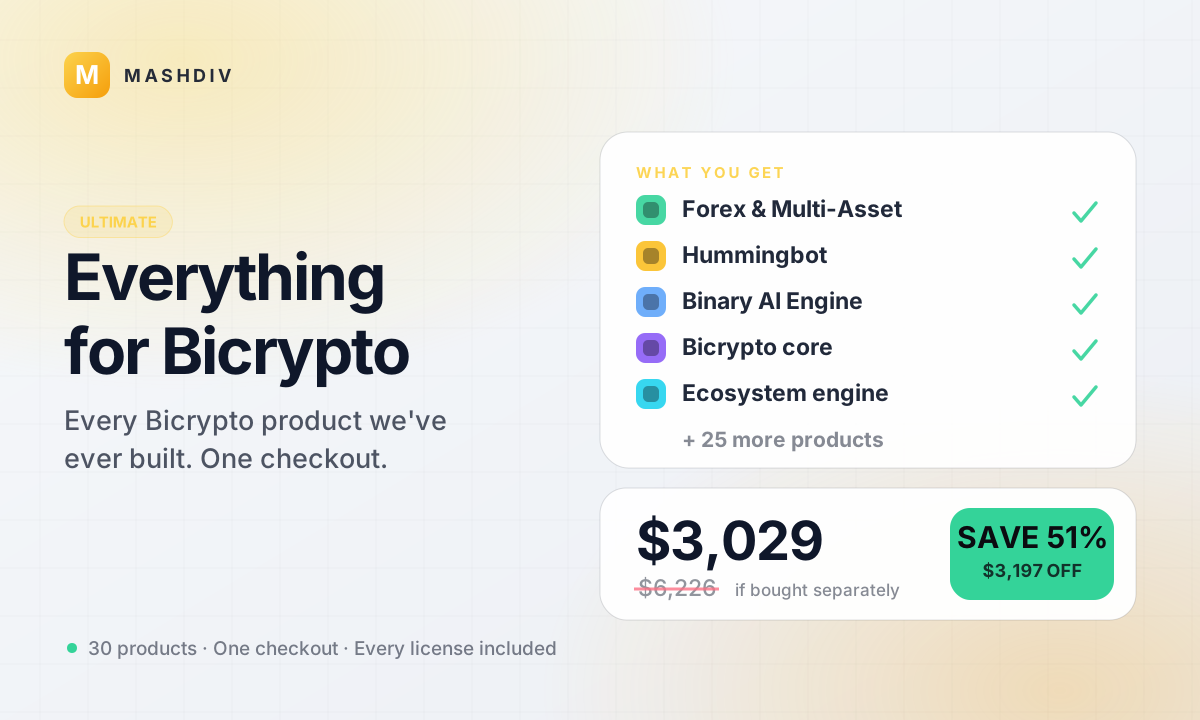
Everything for Bicrypto
Every Bicrypto product we make — every addon, every chain, both apps, one price.
- Forex & Multi-Asset Trading
- Hummingbot Connector
- Binary Trading AI Engine for Bicrypto
- Bicrypto
- + 27 more
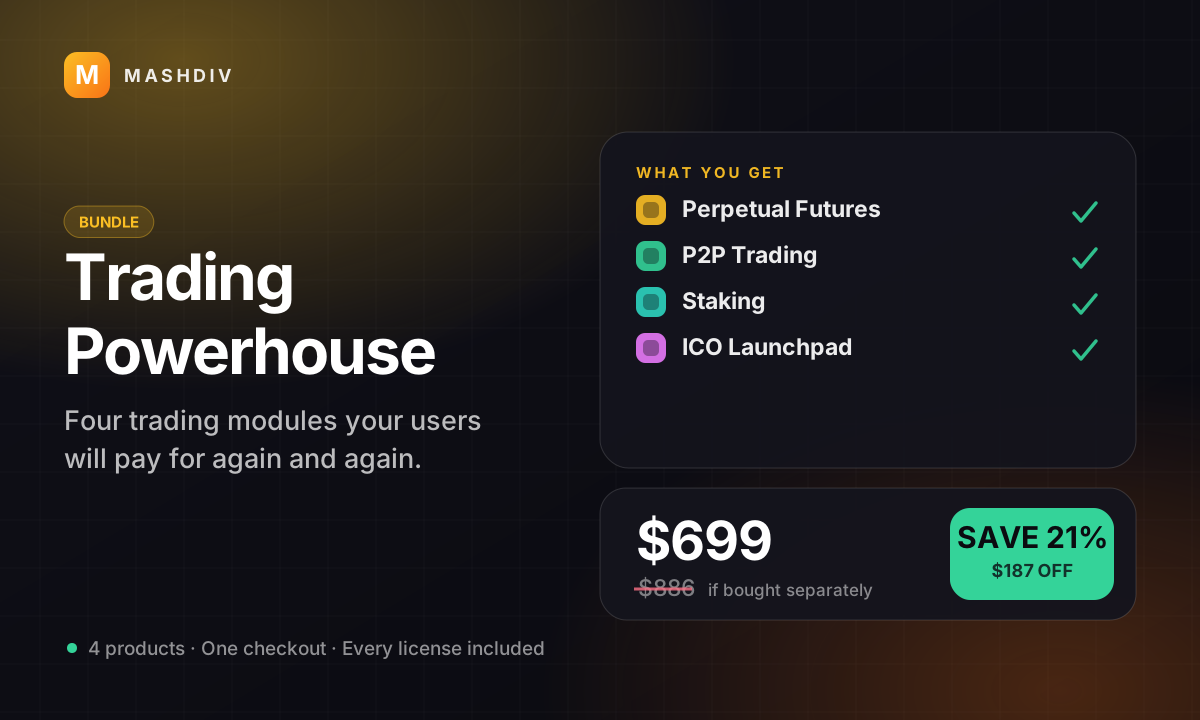
Trading Powerhouse
Four flagship trading products that multiply engagement on any Bicrypto platform.
- Futures Trading for Bicrypto
- P2P Trading for Bicrypto
- Staking for Bicrypto
- ICO/STO/IDO Launchpad for Bicrypto
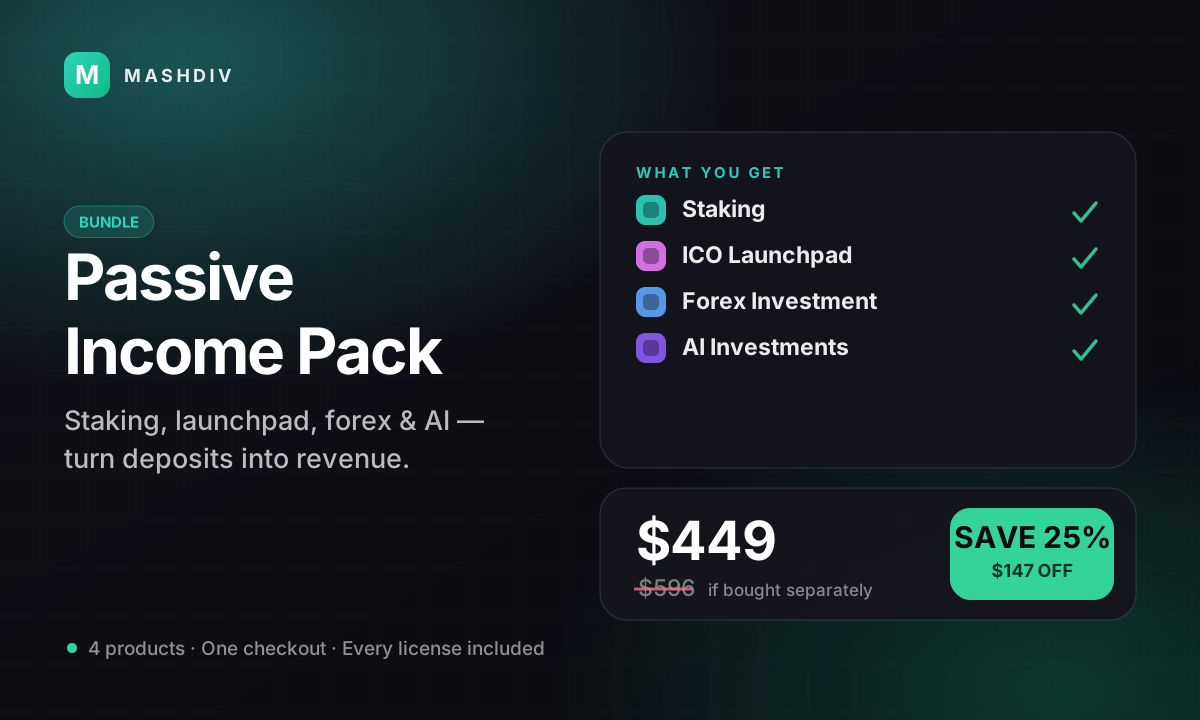
Passive Income Pack
Turn deposits into recurring revenue — staking, launchpad, forex investment, and AI plans.
- Staking for Bicrypto
- ICO/STO/IDO Launchpad for Bicrypto
- Forex Investment for Bicrypto
- AI Investments for Bicrypto
Keep exploring
Related products
 Addon
AddonAI Investments for Bicrypto
A duration-based investment product where you set the term, the rate and the outcome — and fund it yourself.
 Addon
AddonForex Investment for Bicrypto
Run a managed forex desk: you set the plan, the term and the payout, and settlement runs itself hourly.
 Addon
AddonMLM & Affiliate System
Your members bring the next ones, and you pay commission only when a referral actually deposits or trades.